

South African utility bills have outpaced inflation for over a decade. Eskom electricity tariffs rose 12.74% in April 2025 and another double-digit hike is forecast for 2026. Municipal water and rates increases compound on top. The average Joburg or Durban household now spends R3,500-R6,000/month on utilities alone — before food, transport, or debt repayments. This is the practical guide to cutting that bill, organised by what actually moves the needle in rands. Most of what works costs nothing or pays back within 6 months. None of it requires solar panels or capex you don't have.
The Big-Money Items (R500+/month each)
Two-thirds of an average SA electricity bill comes from three appliances: the geyser, the stove, and the heater (in winter) or pool pump (year-round if you have one). Tackle these first — the rest is fine-tuning.
1. Geyser thermostat down to 55°C
The default factory setting on most SA geysers is 65-70°C. At that temperature, the geyser cycles on every 30-45 minutes around the clock to maintain heat. Drop it to 55°C — still hot enough to shower comfortably and well above the 50°C minimum to prevent legionella bacteria — and you save 15-20% on geyser electricity. Estimated saving: R300-R500/month.
2. Geyser blanket + pipe insulation
A R200-R350 geyser blanket and R100-R200 of foam pipe insulation cuts standing heat loss by 40-50%. Pays back in under 2 months. Estimated saving: R200-R400/month.
3. Switch the geyser off when not needed
You don't need the geyser running 24 hours a day. A timer (R350-R600 installed) heats water for 1-2 hours before peak usage times (morning + evening) and switches off the rest. Estimated saving: R400-R700/month.
4. Avoid Eskom peak tariffs (5pm-9pm)
Many municipalities use time-of-use tariffs, charging up to 3x the standard rate during peak hours (typically 5pm-9pm weekdays). Run dishwashers, washing machines, and tumble dryers after 9pm or before 5pm. Charge devices and laptops outside peak. If your municipality publishes time-of-use tariff bands, this can save R150-R400/month.
5. Switch to prepaid electricity
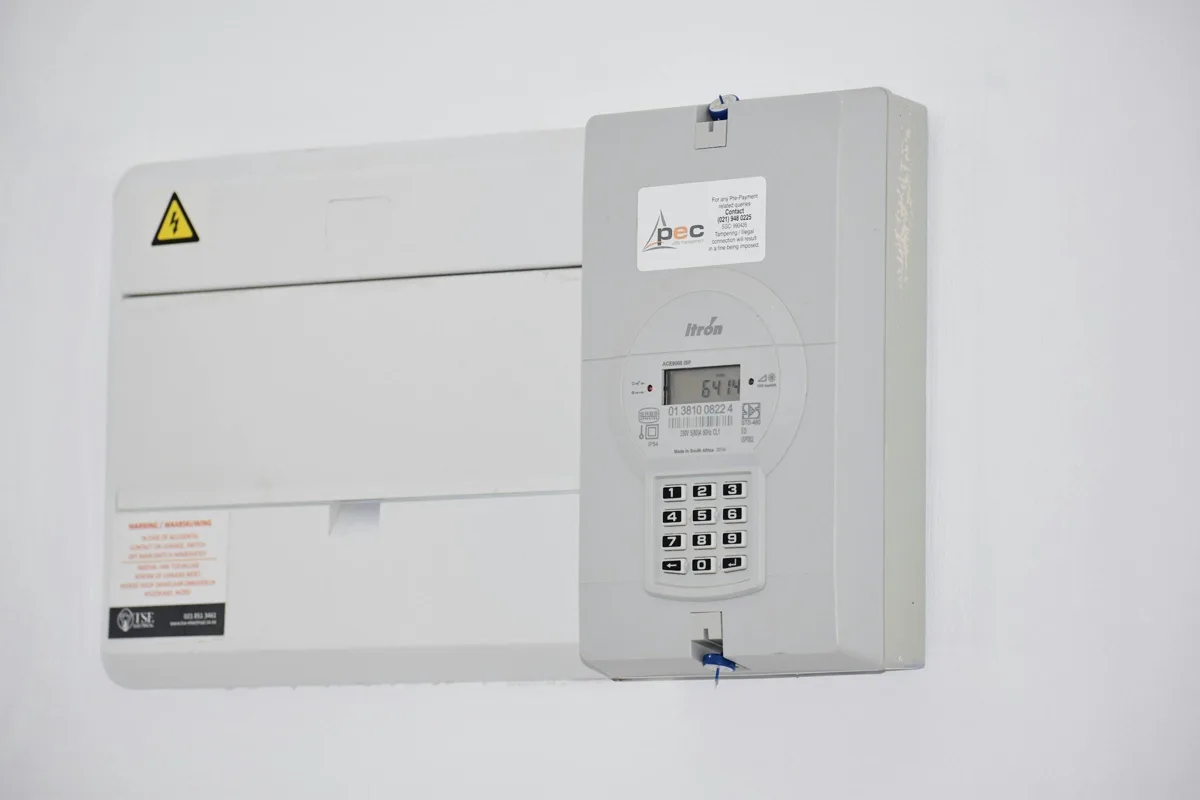
The kWh rate is the same — but households on prepaid use 15-25% less because they actively monitor real-time consumption rather than getting a surprise at month-end. Estimated saving: R300-R600/month from behaviour change alone.
The Quick-Win Items (R100-R300/month each)
6. LED bulbs throughout
An LED bulb uses 80-90% less electricity than an incandescent and 40% less than a CFL. R250-R400 to convert an entire 3-bedroom home. Estimated saving: R80-R150/month.
7. Unplug standby appliances
TVs, decoders, microwaves, computers, phone chargers — "phantom load" appliances sip power 24/7 even when off. A power strip with a master switch makes this one-click. Estimated saving: R100-R200/month.
8. Cold-wash washing machine
Modern detergents work at 30°C. The hot-water cycle uses 80-90% of a washing machine's total energy. Estimated saving: R80-R150/month.
9. Air-dry, skip the tumble dryer
Tumble dryers are the second-most-expensive household appliance after the geyser. Line-dry where possible. Estimated saving: R150-R250/month.
10. Cook smart — pressure cooker, microwave, lids
Pressure cookers use 70% less energy than a stove pot. Microwaves use 50% less than ovens. Putting a lid on a pot cuts cooking energy by 30%. Estimated saving: R100-R200/month.
11. Fridge temperature at 4°C, freezer at -18°C
Most SA fridges are factory-set colder than they need to be. Each degree costs about 5% more electricity. Estimated saving: R50-R100/month.
12. Defrost the freezer regularly
Ice build-up forces the compressor to work harder. Estimated saving: R30-R80/month.
Water-Saving That Actually Saves Money
13. Check for leaks every 90 days
Read your water meter before bed. Use no water overnight. Re-read in the morning. Any movement = a leak. A dripping tap wastes 10-15kL/month. A running toilet wastes 30kL/month. Estimated saving: R150-R600/month if a leak exists.
14. Low-flow showerhead
Cuts shower water use by 40-60% with no noticeable difference in pressure. R150-R400 from any hardware store. Estimated saving: R150-R300/month.
15. Dual-flush toilet retrofit
R200-R500 to convert a single-flush toilet. Estimated saving: R80-R150/month.
16. Rainwater tank for the garden
A 5,000-litre JoJo tank costs R6,000-R10,000 installed. Pays back in 18-30 months in summer-rainfall regions. Estimated saving: R200-R500/month in season.
17. Dispute unusual meter readings
Municipalities make billing errors regularly. If your bill suddenly doubles with no usage change, request a meter test. Estimated readings are common and usually wrong in the municipality's favour. Document your meter reading monthly with a phone photo. Estimated saving: variable, R200-R2,000/month one-off corrections.
Heating & Cooling
18. Close curtains at night, open in sun
Free thermal management. Estimated saving: R100-R200/month in winter.
19. Use blankets and warmer clothing instead of heaters
Bar heaters and oil heaters are extraordinarily expensive — R8-R15/hour to run. Estimated saving: R300-R800/month in winter.
20. Aircon at 22°C, not 18°C
Each degree colder costs 8-10% more energy. Estimated saving: R150-R400/month in summer.
Municipal Rates & Fixed Charges
21. Apply for rates rebates if eligible
Most municipalities offer rebates for pensioners (age 60+), disability grant recipients, and indigent households (typically combined household income under R7,000-R12,000/month). Tswane, Cape Town, Joburg and eThekwini all run these schemes — but the onus is on the homeowner to apply.
22. Municipal debt-relief programmes
eThekwini and the City of Johannesburg run periodic debt-relief programmes that write off rates and water arrears for qualifying residents. Cape Town has a payment-arrangement scheme. If you are in arrears on municipal bills, contact your municipality directly — these schemes have specific application windows and most ratepayers don't know they exist.
23. Object to property valuation if too high
Municipal property rates are calculated on the valuation roll, which is updated every 4-5 years. If your property is over-valued versus comparable sales, you can object during the public-comment window. A successful objection lowers your rates for the next 4-5 years.
Long-Term Capex (When Cashflow Allows)
24. Solar geyser
R15,000-R25,000 installed. Eliminates 30-40% of household electricity. Payback 4-6 years at current rates, faster as Eskom keeps hiking.
25. Solar PV with battery backup
R80,000-R200,000 for a 3-4-person home, depending on system size. Removes load-shedding stress and pays back in 6-10 years. Not viable if you are over-indebted — fix the debt first, then the panels.
The Cumulative Picture
| Category | Upfront Cost | Monthly Saving |
|---|---|---|
| Geyser optimisations (1-3) | R250-R950 | R900-R1,600 |
| Behaviour + LEDs (4-12) | R250-R400 | R890-R1,830 |
| Water (13-17) | R350-R10,500 | R580-R1,550 |
| Heating & cooling (18-20) | R0 | R550-R1,400 |
| Municipal (21-23) | R0 | Variable |
| Realistic combined target | R500-R2,000 | R1,500-R3,500 |
Estimates based on average Eskom 2025 tariffs and typical SA household consumption. Actual savings vary by municipality, household size, and starting baseline. The realistic combined target assumes you implement most items 1-20.
When Cutting Utilities Is Not Enough
If you have implemented most of the items above and your household budget still doesn't balance, the underlying problem is usually not utilities — it is over-indebtedness. Cutting your electricity bill from R3,000 to R2,000/month is real money, but if you are also paying R7,500/month on credit card and personal loan minimums at 22-27% interest, you cannot save your way out of the gap. The maths simply doesn't work.
Debt review under the National Credit Act restructures unsecured debt at 0-5% interest, reducing total monthly debt repayments by 30-50% and freeing the cashflow that no amount of utility-saving can generate. Run our free debt review calculator to see what your restructured payment would look like — it is private, takes 60 seconds, and tells you whether the real fix is utilities or something bigger.
See also our piece on the cost of living crisis in South Africa, how to save money on groceries, and signs you are over-indebted for the broader picture.
Why DS4U: NCR-registered (NCRDC2423), DCASA-accredited, NDCA member, Debt Review Awards top-ten finalist 2023, 2024 and 2025, 116 Google reviews at 4.7 stars, and the only major SA debt counsellor running the entire process on DS Chat. See why South Africans choose us.
Reviewed by a registered debt counsellor, NCRDC2423
Frequently Asked Questions
How can I save on electricity in South Africa in 2026?
The biggest single saving is the geyser — switching it off when not needed and lowering the thermostat to 55°C cuts electricity bills by 30-40% on its own. Add LED bulbs (saves R80-R150/month), a geyser blanket and pipe insulation (saves R200-R400/month), unplugging standby appliances (saves R100-R200/month), and avoiding peak Eskom tariff hours (5pm-9pm) where possible. Combined, an average SA household can cut its electricity spend by R800-R1,500/month with no upfront capex beyond a R200 geyser blanket and a R300 LED bulb upgrade.
Is prepaid electricity cheaper than postpaid in South Africa?
Not directly — the kWh rate is the same. The saving comes from behaviour change: prepaid forces you to see your usage in real time, so households on prepaid typically use 15-25% less electricity than households on postpaid because they actively manage consumption. Prepaid also avoids the surprise of a bigger-than-expected bill at month-end. The downside is the inconvenience of recharging and the risk of running out at 11pm. Most SA municipalities now offer the choice; if you are on postpaid and struggling with bill spikes, switching to prepaid often saves R300-R600/month through behaviour alone.
How much can I save with solar geyser or solar panels in South Africa?
Solar water heating eliminates 30-40% of the average household electricity bill — the geyser is typically the single biggest electricity cost. A solar geyser system costs R15,000-R25,000 installed, with a payback period of 4-6 years at current Eskom rates. Full solar PV (panels + inverter + batteries) for a 3-4 person home costs R80,000-R200,000 and pays back in 6-10 years depending on system size and electricity price increases. SARS Section 12B allows accelerated tax depreciation for solar installations on rental properties or business-use cases. For most over-indebted households, solar capex is not viable — the geyser blanket, LED bulbs, and behaviour changes deliver R800-R1,500/month savings with R500 total spend.
What can I do if my municipal water bill is too high?
First, check for leaks. A dripping tap loses 10-15kL/month. A running toilet wastes 30kL/month. Test by reading your water meter at night, not using anything overnight, and re-reading in the morning — any movement means a leak. Second, install low-flow showerheads (R150-R400, saves R150-R300/month). Third, fit a rainwater tank for garden use (5,000L tank R6,000-R10,000). Fourth, dispute meter readings if your usage suddenly spikes — municipalities make billing errors regularly and consumers rarely query them. If you are in arrears on your municipal account, eThekwini and the City of Johannesburg run debt-relief programmes that write off rates and water arrears for qualifying residents.
What if my utility bills are unaffordable because of debt?
If you are choosing between electricity and other monthly debt repayments — credit cards, personal loans, store accounts — the underlying problem is usually not utilities, it is over-indebtedness. Cutting your utility bill from R3,000 to R2,200/month is helpful but it does not solve a R7,500/month credit-card commitment. Debt review under the National Credit Act restructures unsecured debt at 0-5% interest (down from 14-27%), reducing total monthly debt repayments by 30-50% and freeing up the cashflow you currently can't generate by cutting utilities alone. A free assessment with a registered debt counsellor takes 60 seconds. If your real problem is the debt, no amount of utility-saving will close the gap.
